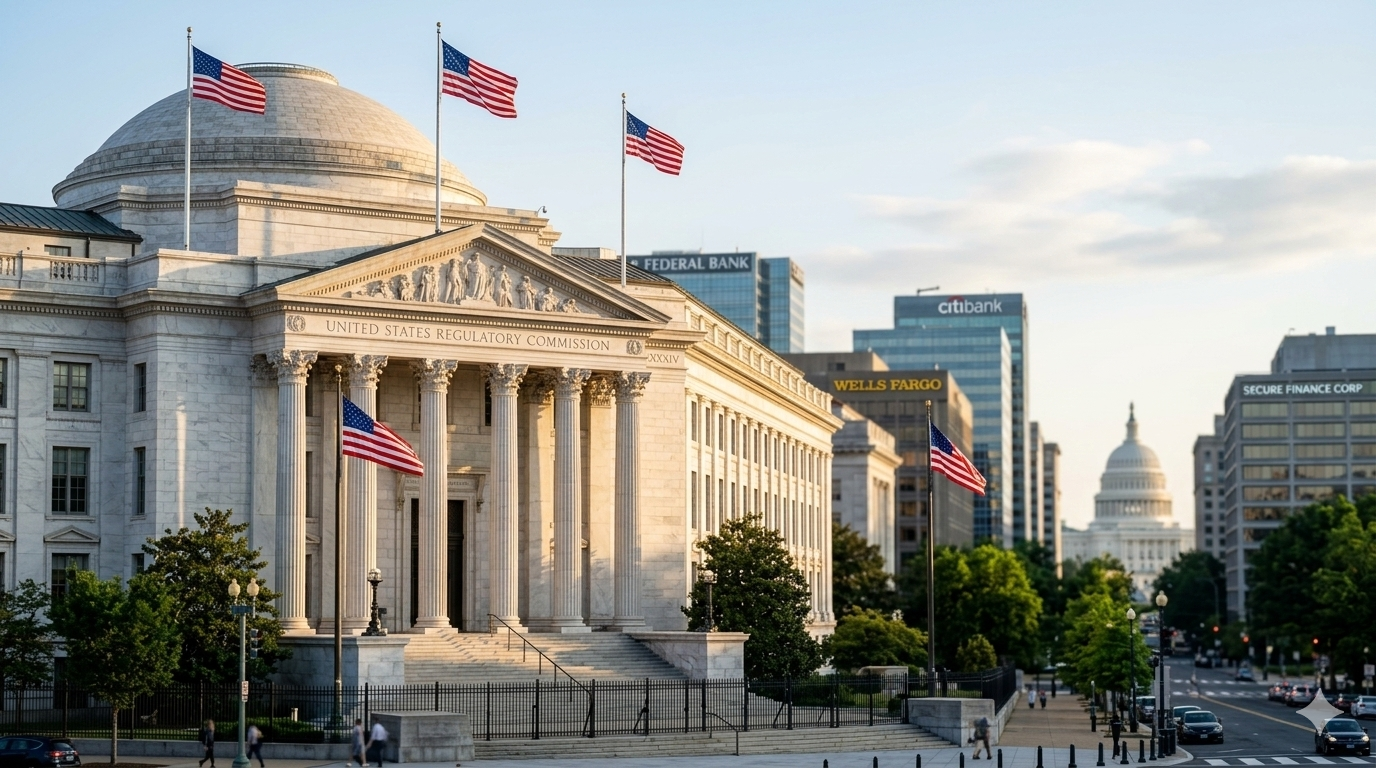

For nearly two decades after the global financial crisis, U.S. financial regulation followed a clear trajectory. Each market shock produced another layer of oversight. Each failure generated another rulebook. The result was a dense supervisory framework built on detailed procedural controls, prescriptive thresholds, and exhaustive compliance architecture.
December 2025 broke that pattern.
In a matter of weeks, actions by the Office of the Comptroller of the Currency, the Federal Deposit Insurance Corporation, and the Federal Reserve signaled something deeper than routine rulemaking. Regulators began shifting away from rigid formulas and toward a supervisory philosophy built around flexibility, institutional judgment, and risk focused oversight.
The moment carries historical symmetry. While regulators loosened prescriptive frameworks, the industry was still paying the bill from the previous crisis. On December 16 the Federal Deposit Insurance Corporation issued an Interim Final Rule modifying the collection of special assessments designed to replenish the Deposit Insurance Fund after the systemic losses triggered during the 2023 banking turmoil.
In other words, the system is settling the debts of the last crisis while simultaneously rewriting the rules for the next one.
1. The Leveraged Lending Pivot
One of the most consequential moves arrived on December 5 when the Office of the Comptroller of the Currency and the Federal Deposit Insurance Corporation rescinded the 2013 interagency leveraged lending guidance.
For more than a decade the guidance imposed informal but powerful constraints on bank participation in leveraged buyouts and corporate acquisitions. Regulators scrutinized deals that exceeded certain leverage ratios and discouraged banks from financing highly indebted transactions.
Banks often criticized the policy as an unofficial regulatory ceiling on corporate borrowing.
The rescission removes those prescriptive thresholds. Instead of enforcing fixed leverage formulas, regulators now instruct institutions to manage these exposures through broader safety and soundness principles.
In practice the shift returns responsibility to bank management and internal risk committees.
Institutions remain accountable for the credit quality of the loans they originate. The difference is that the government no longer dictates the precise numerical boundaries of acceptable leverage.
The message is clear. Banks regain autonomy. Regulators retain the authority to challenge risk decisions during examinations.
2. Digital Assets Move Into the Financial Mainstream
December also marked a turning point in how regulators treat digital finance.
The Federal Reserve withdrew a restrictive 2023 policy statement that had limited the scope of digital asset activity by state member banks. The updated position allows banks to participate more broadly in digital asset related services provided those activities meet standard safety and soundness expectations.
At the same time the Federal Deposit Insurance Corporation introduced a proposed framework governing payment stablecoin issuance.
The proposal establishes a supervisory pathway allowing regulated banks to apply for approval to issue dollar backed stablecoins under the framework associated with the GENIUS Act.
Taken together, the actions represent a dual signal.
First, digital assets are no longer viewed as an experimental fringe. Second, the government intends to integrate them within the existing banking system rather than allowing them to evolve entirely outside of it.
Stablecoins, tokenized payments, and blockchain settlement are now moving inside the perimeter of federal banking supervision.
3. The CFPB’s Operational Crisis
While some agencies are expanding their regulatory frameworks, the Consumer Financial Protection Bureau faces a dramatically different reality.
Congressional action reduced the Bureau’s funding cap, creating uncertainty about the agency’s long term operational capacity. Internal planning documents suggest that the agency’s ability to sustain full scale supervision and rulemaking beyond 2025 remains unclear.
This situation represents more than a budget dispute.
For the first time since its creation, the primary federal consumer protection regulator must prioritize maintaining basic operational continuity over launching major new regulatory initiatives.
Supervisory activity resumed in December, yet it now operates under tighter internal review processes and constrained resources.
The consequence is a temporary vacuum in consumer finance rulemaking. Lenders, fintech companies, and consumer advocates all face uncertainty about how aggressively the agency will be able to enforce or expand regulatory standards in the near future.
4. Private Equity Faces Sanctions Scrutiny
December delivered a stark reminder that financial risk increasingly intersects with geopolitical policy.
On December 2 the Office of Foreign Assets Control announced an eleven million dollar settlement with the investment firm IPI Partners for violations related to Russian sanctions.
The enforcement action carries implications beyond a single firm.
Private equity funds have traditionally treated sanctions compliance as a responsibility handled at the portfolio company level. OFAC’s action signals a different expectation.
Investment sponsors themselves must maintain rigorous oversight of their global exposures, counterparties, and investment structures.
In the current geopolitical climate, sanctions compliance has evolved into a core operational risk rather than a secondary legal consideration.
5. The Ransomware Crypto Nexus
The final development highlights the growing intersection between cybercrime and financial regulation.
A December financial trend analysis from the Financial Crimes Enforcement Network examined suspicious activity reports between 2022 and 2024 and identified a striking trend.
Cybercriminal networks are increasingly using cryptocurrency infrastructure to launder ransomware proceeds and move funds through complex digital pathways.
The analysis revealed three important patterns.
Criminal organizations are developing sophisticated crypto laundering strategies.
Payment patterns show increased coordination among cybercrime groups.
Links between ransomware actors and organized financial networks are strengthening.
For financial institutions the implication is straightforward. Cybersecurity incidents now extend directly into the domain of anti money laundering compliance.
Detecting suspicious blockchain activity has become as important to the integrity of the financial system as monitoring traditional bank transfers.
Sidebar: The Slow Disappearance of the Paper Check
A smaller but symbolic development arrived on December 4 when the Federal Reserve requested public comment on the future of its check processing services.
Check usage continues to decline as digital payment systems dominate retail and commercial transactions. The central bank is now evaluating whether maintaining the existing infrastructure for paper check clearing remains economically justified.
If the system eventually winds down, it would mark the gradual disappearance of another pillar of twentieth century financial infrastructure.
Conclusion: A Shift Toward Principles Based Supervision
The developments of December 2025 reveal a financial regulatory system entering a new phase.
Prescriptive frameworks such as leveraged lending guidance are disappearing. Digital assets are moving into the regulated banking perimeter. Sanctions enforcement and cybercrime monitoring are rising in importance. And the country’s primary consumer watchdog faces an uncertain institutional future.
The common thread linking these changes is a transition toward principles based supervision.
Instead of governing financial institutions through detailed procedural instructions, regulators are increasingly defining broad risk standards and expecting institutions to demonstrate that they can manage those risks responsibly.
The coming year will test whether this approach produces a more dynamic and innovative financial system.
It will also reveal whether reduced prescriptive oversight leaves institutions strong enough to confront the increasingly complex risks of a digital financial era.