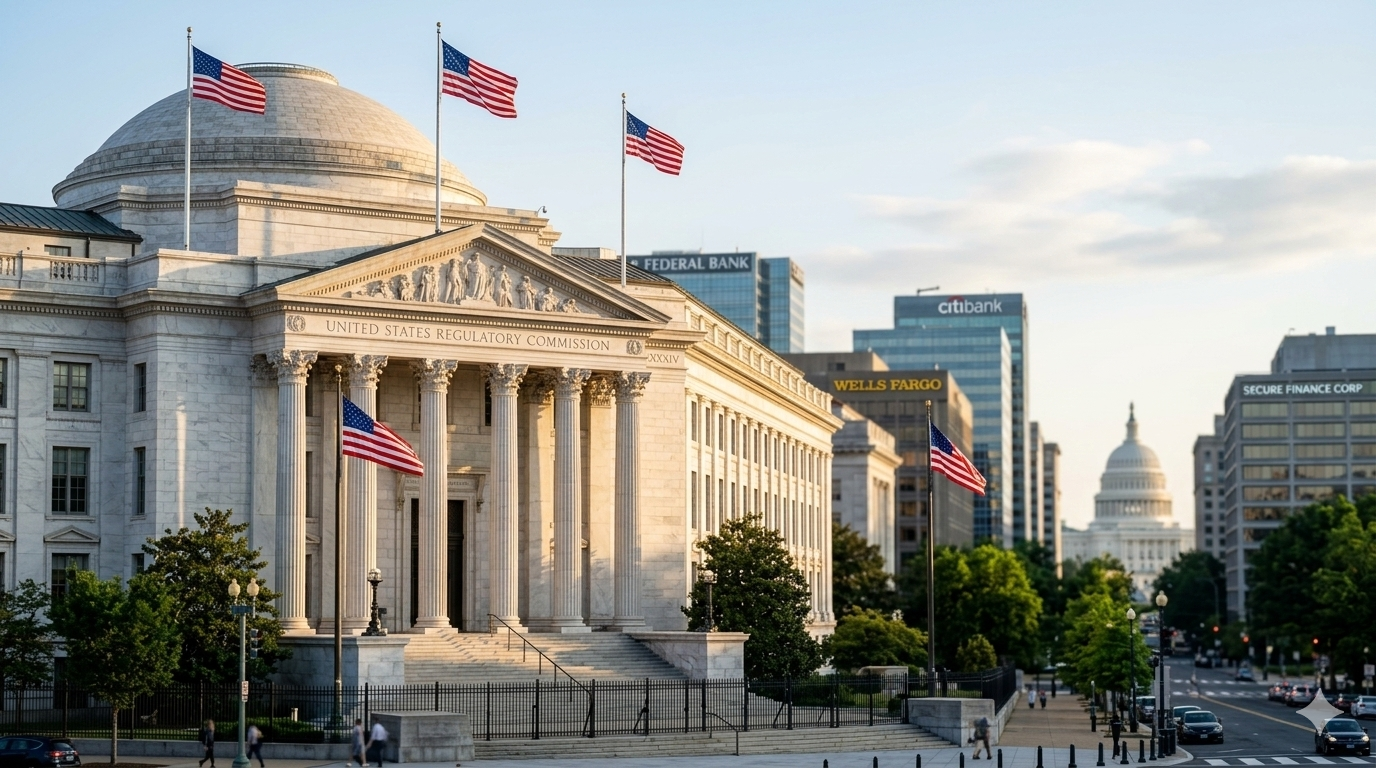

For decades, the United States banking system carried a reputation for slow regulatory change. Policy adjustments often unfolded over years, shaped by extensive consultation and cautious implementation. The period between February 5 and March 6, 2026 tells a different story.
Recent developments across major financial regulators reveal a rapid realignment in oversight strategy. Insights from the U.S. Financial Regulatory Intelligence Report describe this moment as a regulatory recalibration. The shift reflects a broader reassessment of how financial institutions operate, how they are supervised, and how emerging technologies fit within the regulated banking system.
This transition follows a significant administrative change and introduces a more targeted approach to supervision. Regulators now emphasize individual accountability, technological integration, and streamlined compliance frameworks rather than the broad institutional mandates that characterized much of the early 2020s.
While the Federal Reserve continues managing inflation with transparent monetary policy, the supervisory landscape continues evolving. Regulators now balance two priorities: modernizing payment systems and reducing administrative complexity for domestic institutions.
Recent actions by the Federal Reserve, the Federal Deposit Insurance Corporation (FDIC), and the Office of the Comptroller of the Currency (OCC) reveal a consistent pattern. A supervisory model shaped by aggressive enforcement now gives way to a strategy focused on regulatory right sizing.
The following five developments illustrate how this recalibration is reshaping the U.S. banking sector.
1. The End of an Era: Wells Fargo Breaks Free
One of the most significant regulatory developments of the year centers on the conclusion of the 2018 enforcement action against Wells Fargo.
For years, this action represented the defining symbol of intensive federal scrutiny toward major financial institutions. The order addressed systemic compliance and governance deficiencies within the bank and became one of the most visible enforcement actions in modern U.S. banking history.
The decision to terminate the order marks more than the resolution of a single case. It signals a broader shift in supervisory philosophy. The closure demonstrates that extensive remediation efforts reach completion once institutions meet defined compliance milestones.
This development also introduces greater transparency into policy deliberations within the Federal Reserve. Markets receive a clear signal that regulators recognize and reward comprehensive improvements in risk governance and operational oversight.
According to the Federal Reserve:
“The Federal Reserve determined the bank satisfied required remediation commitments and compliance conditions regarding the 2018 enforcement action.”
The resolution effectively closes a chapter in post financial crisis regulatory history and opens space for a new supervisory approach.
2. Retro Regulation: Why Banking Is Looking Back to 1995
Another notable shift involves a surprising regulatory proposal from federal banking agencies regarding the Community Reinvestment Act (CRA).
Rather than implementing the updated 2023 CRA rule, regulators propose rescinding it and restoring the long standing 1995 framework.
At first glance, a return to a framework developed three decades earlier appears counterintuitive. Policy analysts view the move as part of a larger effort tied to the Economic Growth and Regulatory Paperwork Reduction Act (EGRPRA) review process.
The objective centers on identifying regulations that accumulated administrative complexity over time. By returning to the 1995 structure, regulators stabilize the compliance environment while conducting a broader reassessment of modern community investment policy.
This retroactive approach forms a central pillar of the broader regulatory recalibration. It allows agencies to pause recent regulatory expansions while evaluating which requirements remain necessary for today’s banking environment.
3. Accountability Gets Personal: Moving Beyond Institutional Fines
A major transformation also appears within enforcement strategy.
Historically, regulators relied heavily on institutional penalties, often imposing large fines on banks for systemic compliance failures. Recent enforcement activity signals a growing emphasis on individual accountability.
The OCC increasingly focuses on misconduct by specific individuals rather than solely addressing institutional deficiencies. Regulators view personal liability as a powerful driver of cultural change within financial institutions.
Several recent enforcement actions involve former employees from multiple banks, including:
- East Cambridge Savings Bank
- United Bank
- First Financial Bank
- Regions Bank
This approach shifts regulatory pressure directly onto the decision makers responsible for misconduct.
The strategy already influences institutional behavior. A notable example appears in the turnaround of USAA Federal Savings Bank. After significant investment in compliance systems and risk governance following earlier OCC orders, the institution returned to profitability in 2025.
The case illustrates how strong remediation efforts combined with individual accountability support both regulatory compliance and institutional growth.
4. Stablecoins Enter the Regulated Banking System
Digital assets continue moving closer to the traditional banking system.
A new FDIC proposal outlines procedures allowing supervised banks to issue payment stablecoins through subsidiaries under the framework of the GENIUS Act. This development represents a significant step toward integrating digital asset infrastructure within federal banking supervision.
Rather than treating stablecoins as an external challenge to traditional finance, regulators now view them as a potential component of modern payment systems.
The proposed framework provides a pathway for banks to issue stablecoins while operating within established safety and soundness standards. This integration reduces regulatory uncertainty while expanding the range of tools available for digital payments.
The shift confirms that digital assets now occupy a central role in the future architecture of financial services rather than existing on the margins of fintech experimentation.
5. AI and Cybersecurity Become Systemic Risk
Cybersecurity and artificial intelligence governance now occupy a central position in financial supervision.
Findings from the Cybersecurity and Infrastructure Security Agency (CISA) and the National Institute of Standards and Technology (NIST) highlight an evolving threat landscape facing financial institutions.
Banks increasingly encounter sophisticated attack vectors such as credential harvesting campaigns and third party vendor compromises. Regulators view these risks as potential triggers for systemic financial instability.
Smaller institutions attract particular attention from ransomware operators, creating additional urgency around defensive capabilities.
Regulators now encourage institutions to apply the AI Risk Management Framework within broader model risk governance systems. This approach treats AI driven tools as part of the same oversight structure used for financial modeling and automated decision systems.
Key areas of emphasis include:
- Supply chain compromise
- Identity infrastructure vulnerabilities
- Active exploitation vulnerabilities
This integration ensures that automated systems and identity platforms receive the same level of scrutiny as traditional financial models.
Conclusion: A Banking System in Transition
The regulatory environment of 2026 reflects a complex recalibration across the U.S. financial system.
Regulators pursue multiple objectives simultaneously. Payment infrastructure modernization continues through digital asset integration. Cybersecurity and AI governance rise to the level of systemic oversight. Administrative burdens receive renewed scrutiny through regulatory simplification.
Together, these initiatives point toward a banking system designed for technological resilience, operational efficiency, and stronger individual accountability.
Economic conditions add further complexity to this transition. Recent FDIC data shows a Return on Assets of 1.24 percent, reflecting pressure from margin compression, rising funding costs, and the normalization of credit conditions following years of historically low losses.
These developments raise an important question for the coming months.
Will regulatory recalibration deliver the operational efficiency banks need in a tightening economic environment, or will the normalization of credit conditions expose vulnerabilities that policy reform alone cannot resolve?