
AI Inventory Management: 6 Reg Mistakes
You know that moment when someone forwards you an artificial intelligence in banking case study pdf, and suddenly your week turns into a scavenger hunt for where AI is hiding in your bank’s tech stack. One vendor says, “We use machine learning,” another says, “We use AI features,” and a third swears it is “just automation,” and you are the one who has to sort out what any of that means when an examiner asks. The tricky part is not curiosity, it is paperwork, proof, and keeping your story straight across teams.
If you sit in the seat where vendor oversight and exams live, you already feel the pinch, because you are trying to govern what you can’t always see, and document what you didn’t personally build. BankTechIntel exists right in that gap, since it helps banks understand, govern, and document their technology environment, inventories software vendors, identifies AI usage, evaluates technology risk, and generates the regulatory documentation exam teams ask for. That takes the “Where do I even start?” feeling and turns it into something you can actually hold in your hands.
Once you start reading real case studies, you notice a pattern, most of the wins come from basics done well, like knowing what models are in play, who owns them, what data they touch, and how risk got assessed, and most of the pain comes from letting those basics scatter across spreadsheets, inboxes, and hallway chats.
TL;DR, The Fast Version Before Your Next Meeting
- AI inventory management in banks turns into a regulatory problem when AI shows up inside vendor tools, updates, plugins, and “features” that never make it into your official inventory.
- Case studies on banking AI tend to highlight outcomes, but the exam-day question is usually, “Show me governance, controls, and documentation.”
- A common assumption is that AI only counts if you built a model in house, but third party and embedded AI count too when they affect decisions or risk.
- Another common assumption is that a vendor SOC report alone covers AI risk, but model use, data flow, and change control still need their own paper trail.
- Using the AI inventory tool from BankTechIntel can reduce the scramble by inventorying vendors, flagging AI usage, mapping risk, and producing exam-ready documentation in one place.
Artificial Intelligence in Banking Case Study PDF: The Easy Trap
People read an artificial intelligence in banking case study pdf and walk away thinking the hard part is picking the right AI use case, like fraud, credit, call centers, or marketing, and the rest is just “manage it like any other software.” That sounds tidy, until you remember AI changes, data shifts, vendors merge, and “small model updates” land on a Friday at 4:55 p.m. like a raccoon tipping over a trash can, loud, messy, and now it is your problem.
One clean way to avoid that trap is to treat AI like a thing you must inventory, same as systems, vendors, and critical services, because regulators tend to care about governance, accountability, and risk more than buzz. BankTechIntel’s AI inventory tool helps by keeping a living inventory of vendors and systems, then tagging where AI is used, so your documentation does not depend on someone remembering a meeting from six months ago.
The Tuesday Before Exams, When It Starts Innocently
It starts with a normal ask, a CEO wants a quick update, a compliance lead wants to know what “AI” exists in the bank, and IT is busy keeping the lights on. Someone sends an artificial intelligence in banking case study pdf with highlighted lines, and the highlights look sensible, model risk management, third party oversight, data governance, monitoring, the usual suspects, and you think, “Okay, we can map this to our program.”
Then the vendor manager pings you, because one core provider quietly rolled out an “AI assistant” for back office tasks, and customer support is trialing a chat feature, and your internal audit leader wants evidence of approvals. The bank is not trying to be sneaky, it is just moving fast, and each team sees only their slice of the pie.
Artificial Intelligence in Banking Case Study PDF: The Oh No Moment
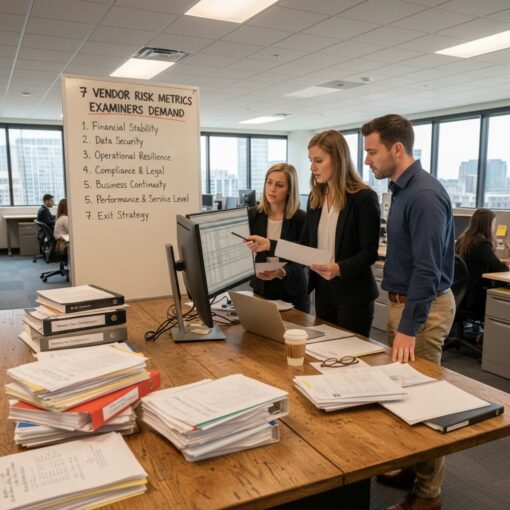
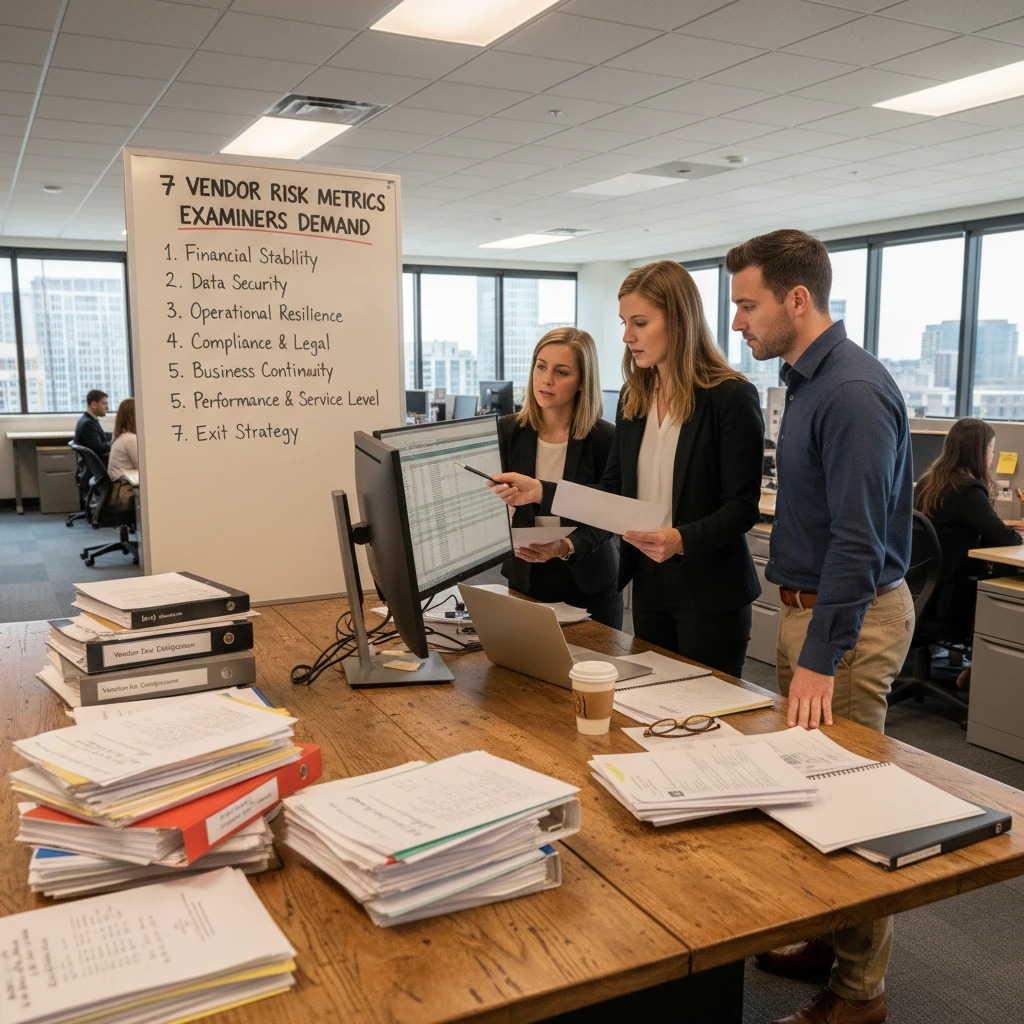
The real gut punch often lands when an examiner asks a simple question with sharp edges, “List all AI used by the bank, including third parties, and show the risk assessment and controls.” You can feel the room get smaller, because the truth is spread across vendor contracts, questionnaires, security reviews, model notes, and maybe a spreadsheet last updated before the last OS patch. Even if you are doing good work, it can look fuzzy when it is not stitched together.
That is the moment where case studies feel oddly unhelpful, because they talk about success, but you are staring at traceability, like, “Who approved this feature, what data does it touch, and where is the proof?” It can feel like you are holding a stack of paper in one hand and chasing moving targets with the other, and the targets keep changing their hats.
Six Reg Mistakes That Keep Showing Up
You do not need a dramatic failure to get into trouble, you just need small gaps that pile up, and most banks see the same set of stumbles again and again. This is where the AI inventory tool from BankTechIntel can make life simpler, because it gives you one place to capture vendors, AI usage, risk notes, and exam documentation without reinventing the wheel each quarter.
- Counting only “models we built” and missing embedded AI in vendor products
- Letting business units adopt AI features without routing them through vendor management and risk review
- Tracking AI in a spreadsheet that cannot show version history, ownership, or supporting evidence
- Relying on a SOC report as the whole story, without mapping data use and model behavior
- Skipping change tracking when vendors add AI features during normal product updates
- Producing exam documentation by hand at the last minute, instead of generating it from an inventory that stays current
One quirky detail that tends to be true in real life, the “official” system list might be in a binder on a shelf, while the real system list lives in someone’s email folders named things like “Vendor Stuff 2024 Final FINAL.” That is not a character flaw, it is just what happens when tools do not match the job.
Artificial Intelligence in Banking Case Study PDF: What Proof Looks Like
When you look across well known themes in published banking AI materials, the same controls show up in different outfits, governance, data controls, monitoring, third party oversight, and clear accountability. What changes is how cleanly a bank can show it, like a chain of receipts, and that is where inventory management matters most.
A practical way to think about it is to keep your documentation tied to the system or vendor record itself, so evidence stays attached to the thing it describes. BankTechIntel’s platform is built around that idea, inventory vendors and systems, identify AI usage, evaluate tech risk, then generate regulatory documentation for bank examinations, so you are not rebuilding the story each time.
| What the examiner asks for | What you need on hand | Where it tends to fall apart |
|---|---|---|
| Where is AI used? | An inventory of systems and vendors with AI flagged | AI hidden inside vendor “features” |
| Who owns it? | Named owner, approvals, governance notes | Ownership split across teams |
| What data does it touch? | Data types, flows, access, retention | Data mapping not linked to the tool |
| How is risk assessed? | Risk rating, rationale, controls, review dates | Risk docs stored separately |
| What changed? | Change history, vendor updates, reviews | Updates happen outside your process |
And yes, this is where your local reality matters, because a community bank in Ohio dealing with a regional core provider has different vendor sprawl than a big national shop, but the exam questions rhyme all the same.
A Cleaner Way to Think, Then a Cleaner Way to Work
The shift that seems to help most is treating AI as part of technology governance, not as a special science project that sits off to the side. That means your vendor inventory and your AI inventory should not fight each other, they should be the same living record, with clear owners, review dates, and linked evidence.
So, instead of reading one more artificial intelligence in banking case study pdf and trying to copy its checklist into yet another document, you can use the AI inventory tool in BankTechIntel to capture what is actually running in your environment, who provides it, where AI is present, and what documentation supports your oversight. It is less like juggling six tennis balls, more like stacking dinner plates, still work, but stable.
If You Want a Hand, Keep It Simple
If you are trying to line up compliance, risk, IT, security, and audit without turning your calendar into a parking lot, it helps to have one shared source of truth. BankTechIntel is built to inventory vendors and systems, identify AI usage, evaluate technology risk, and generate regulatory documentation for exams, which matches how community banks usually have to operate, lean teams, high scrutiny, lots of moving parts.
If that sounds like it would make your next exam cycle calmer, Contact Us, and ask about using the AI inventory tool at www.banktechintel.com.
Artificial Intelligence in Banking Case Study PDF: Key Takeaways for Exam Day Sanity
- Treat AI as part of your tech and vendor inventory, because AI often arrives inside third party tools.
- Keep ownership, data notes, risk assessment, and evidence connected to each vendor and system record.
- Track change over time, since vendor updates can add AI without much fanfare.
- Use a tool that can generate exam-ready documentation from your inventory, instead of rebuilding it late.
- BankTechIntel’s AI inventory tool supports inventory, AI identification, risk evaluation, and regulatory documentation in one workflow.
The funny thing about AI in banking is that the tech can feel futuristic, but the hardest parts tend to be basic, knowing what you run, who runs it, what it touches, and how you prove you are watching it. Once that’s steady, the case studies read less like a warning label and more like a menu.