

The April 2026 Regulatory Intelligence Report lands at a weird moment for banks, lenders, fintech teams, and compliance leaders, because the rules are moving fast, the pressure is real, and one missed update can turn a normal quarter into a fire drill by Friday afternoon. According to the report, April
U.S. Finance
13 posts

For decades, the United States banking system carried a reputation for slow regulatory change. Policy adjustments often unfolded over years, shaped by extensive consultation and cautious implementation. The period between February 5 and March 6, 2026 tells a different story. Recent developments across major financial regulators reveal a rapid realignment

The Redesign of Financial Oversight Regulatory filings rarely command headlines. Most arrive wrapped in dense legal language and technical appendices, destined for compliance teams and policy specialists rather than public debate. Yet the documents released in February 2026 tell a more consequential story. Across multiple agencies, the foundations of financial

Four Radical Shifts in U.S. Banking, January 2026 January 2026 revealed something deeper than routine policy updates. Beneath the surface of market headlines and rate speculation, the infrastructure of American finance quietly crossed an inflection point. For decades, the system balanced two eras at once. Physical currency, legacy regulatory doctrine,

For nearly two decades after the global financial crisis, U.S. financial regulation followed a clear trajectory. Each market shock produced another layer of oversight. Each failure generated another rulebook. The result was a dense supervisory framework built on detailed procedural controls, prescriptive thresholds, and exhaustive compliance architecture. December 2025 broke

For nearly twenty years after the global financial crisis, U.S. banking supervision followed a single instinct: more rules, more forms, more oversight. Washington’s relationship with Wall Street hardened into a dense regulatory architecture where compliance documentation often seemed as important as the actual health of a bank’s balance sheet. November

Financial regulation rarely moves quickly. The modern framework governing American banks grew layer by layer after the 2008 financial crisis, creating a supervisory system defined by dense rulemaking, expanding compliance departments, and an almost permanent posture of precaution. October 2025 broke that pattern. Across multiple agencies in Washington, regulators began

For nearly a decade, American banks operated under a peculiar supervisory atmosphere. Capital ratios still mattered, liquidity buffers still mattered, but something less quantifiable hovered over the entire regulatory process. Call it reputational optics. Call it political risk. Call it the raised eyebrow of the examiner across the table. September
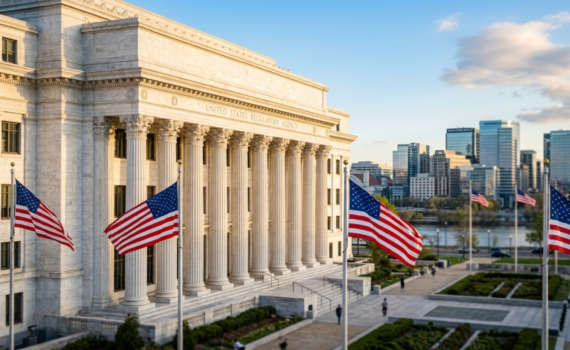
On August 7, 2025, a quiet but profound change reshaped the architecture of U.S. financial supervision. For years, the regulatory environment surrounding American banks evolved under a widening constellation of expectations. Risk was no longer measured purely in capital ratios or liquidity buffers. It increasingly included reputational exposure, political optics,

Washington in July carries a familiar humidity, but inside the policy corridors of the Federal Reserve and the U.S. Department of the Treasury the atmosphere feels less like summer and more like renovation season. For nearly two decades financial regulation expanded the same way an old forest grows. Layer after

For decades, financial supervision lived in a strange contradiction. Banking became digital, instantaneous, and globally interconnected, while the regulatory apparatus overseeing it remained stubbornly analog. Supervisory judgments often hinged on vague concepts, subjective assessments, and the quiet influence of examiner discretion. By mid 2025 that tension finally snapped. June marked

In 2023 the U.S. banking system felt like it was one tremor away from a full scale rupture. The sudden collapses of regional lenders triggered a contagion of panic across markets. Depositors fled. Liquidity facilities multiplied overnight. Regulators moved with emergency authority while the financial press tracked every balance sheet